Sunday, February 27, 2011

Henry Norris Russell Essay 3

     Henry Norris Russell was born on October 25, 1877, in Oyster Bay, New York. He received the majority of his education at Princeton. He graduated in 1897 with the highest standing of a Princeton student ever. During his time he was considered the best American astronomer, and his discoveries and awards exemplified that thought.
      "A man of overflowing energy, never sparing himself in his own work or in assisting the researches of others, he was the most eminent and versatile theoretical astrophysicist in the United States if not in the world." was used to describe Russell on an obituary by Colonel Stratton.
     Some of his most amazing contributions were the color magnitude diagram, eclipsing binary theory and calculations, spectrum analysis, discovering the mass of stars, and the popularization of astronomy at a high level. But, Russell also made great contributions to solar and stellar composition and constitution, the origin of the planets and comets, characteristics of planetary atmospheres, the contacts of religion of science, and consulting on all astronomical and spectroscopic problems. The man wrote over 200 technical papers, and his contributions were all around simply amazing to everything studied nowadays. Colonel Stratton was right in saying that Russell was a man of unequaled versatility.
     Working apart from Ejnar Hertzsprung, Russell demonstrated the relationship between types of stars and their absolute magnitude. He then collaborated with Hertzsprung to create the Hertzsprung-Russell Diagrams. This H-R diagram mainly traced the placing of the main sequence stars, giants and dwarfs.
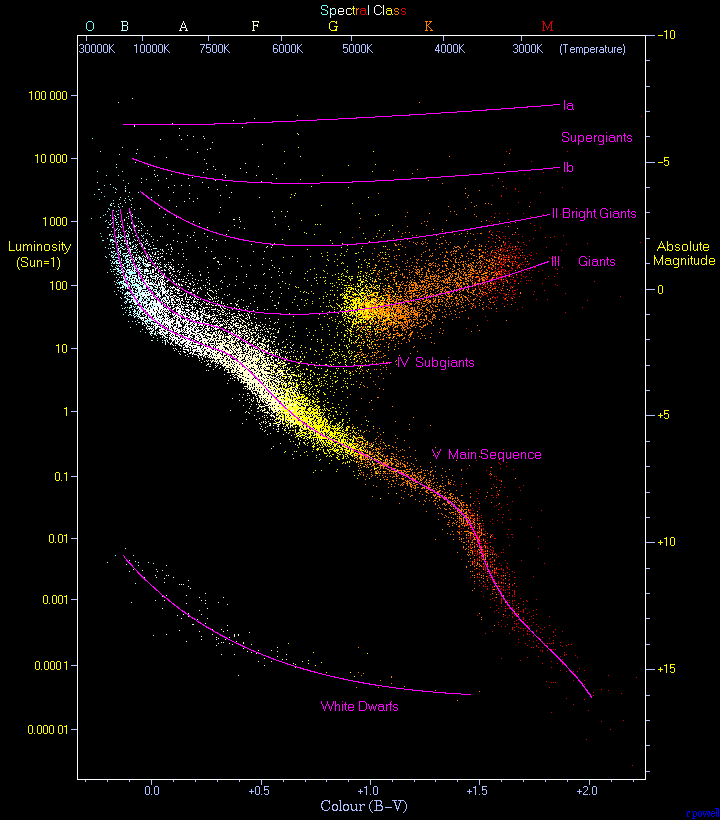
     Working with Frederick Saunders, he developed Russell-Saunders coupling which is also known as LS coupling. This is not nearly astronomical, but shows the true range of his studies, and the powers of ten. Russell was an great man and astronomer and without his contributions the field of astronomy wouldn't be anywhere on the map.

Tuesday, February 22, 2011

Henry Norris Russel Sources

"Henry N. Russell Definition of Henry N. Russell in the Free Online Encyclopedia." The Free Encyclopedia. Farlex. Web. 22 Feb. 2011. <http://encyclopedia2.thefreedictionary.com/Henry N. Russell>.

"Henry N Russell, Henry N Russell Science Definition | Science Dictionary." Dictionary.com. Ask.com. Web. 22 Feb. 2011. <http://dictionary.reference.com/science/henry n russell>.

Shapley, Harlow. "Henry Norris Russel." National Academy of Sciences (1958). Print.

Friday, February 18, 2011

APOD 3.5

X-Factor
This picture was taken on Monday, February 14th 2011. Whats better than a bunch of roses for Valentine's day? The Sun has the answer. An X-class flare is what we all of humanity likes. This is like the dawning of the age of Aquarius for solar astronomers. An X-class flare is a massive solar flare, one that has not been seen for quite some time. The flare was so bright that it distorted the pixels of the image from overflow. This X-class flare caused an coronal mass ejection. What none of these sites or the APOD explained was that if there is a possibility for a flare of this magnitude to damage or effect Earth, other than in some killer Aurora. Anyways, this flare is the courier for a much welcomed solar maximum, which will mean even more ejections and flares. The solar maximum also peaks around 2012...

Friday, February 4, 2011

APOD 3.3

The Whirlpool Galaxy, M51
An extremely beautiful sight to see in infrared. This is the perfect time for this APOD to come along as we are studying interstellar medium. This photo is shopped to dissipate the glare of the massive amounts of stars withing the galaxy, but it still is a behemoth of doom. The extremely large and swirly galaxy is only about 15,000 light years across, no big deal, but its shape and pronounced swirls are the most interesting part. The reason the image was taken was to explore how the galaxy forms stars. The interstellar medium we are studying definitely pertains to the giant laboratory that this galaxy is. This is a beautiful sight, but I wish we could explore it more.

Friday, January 28, 2011

APOD 3.2

Tarantula Nebula
Yes, on my blog I cover a lot of nebula and space dust, but it is all so beautiful and interesting. I do in fact know that they all come from coloration, but they are still stunning to view without the luminous colors. The sheer mass and size of this nebula is ridonculous. It is nearly 1,500 light years across. We aren't even a cell in this massive universe. How is anything or anybody even aware of our existence if everything is so spaced out, but more about the nebula. The nebula is a star forming region that is located within this large Magellianic cloud, and the whole thing revolves around our Milky Way. If the nebula was placed as close as the Orion nebula, it would command 30 degrees of the sky, you know, only 60 full moons worth. This is a spectacular sight and this is why I love ASTRO.

Friday, January 21, 2011

APOD 3.1

Alnitak, Alnilam, Mintaka
The three wondrous stars of Orion the Hunter's Belt. First off, I am a sucker for anything having to do with Orion, because well... (Orion-O) x (Capital First Letter) = Rion, and the fact that there is so much to observe in Orion itself. These three beautiful stars that make up the belt are super giant massive bluish stars, and are much larger than our Sun. One thing that makes this belt picture so interesting is it captures the true scale of how many dust clouds are within Orion. To the left near Alnitak resides the Horsehead Nebula and the Flame Nebula. To the bottom, it is possible to see the beginning of what is the famed Orion Nebula. This is a beautiful mosaic of 2 photos, and contributes great homage to the constellation I am named after.

Friday, January 14, 2011

APOD 2.8


The Antikythera Mechanism

This is probably one of the finest ancient creations ever. The most primitive computer on this planet. This interested me so much that I simply had to do more research on the matter. In particular I watched a video with a college proffesor that made a perfect home made model representation of the mechanism. This ancient device was used to tell dates to tell the positions of the moon, sun, stars, and basically a map for see goers. There is a nob which when turned, turns the mechanism to different days indicated on the mechanism. As the nob turns, multiple rings shift, and are used to identify the positions of celestial objects. This is definitely a fascinating piece of technology, and makes me wonder how people so ancient could make such amazing technology, and make me realize that there must be much mre we don't know about to discover.